High-precision autonomous navigation systems designed for heavy industrial payloads and narrow-aisle warehouse optimization.
The technological landscape of supply chain automation is shifting from pre-guided fixed paths to smart-mapping autonomous fleets.
In modern industrial environments, the shift toward autonomous material handling is accelerating. Key drivers include acute labor shortages, shifting consumer demands for faster cycle times, and the urgent need to optimize space within high-density urban fulfillment centers. Today's robotics industry is moving past basic automated guided vehicles (AGVs) toward fully dynamic, Laser SLAM-based Autonomous Mobile Robots (AMRs) and smart forklift platforms.
1. The Evolution of Navigation: Laser SLAM Domination
Traditional AGVs relied on magnetic tape, embedded wires, or QR code arrays. Modern installations prioritize Laser SLAM (Simultaneous Localization and Mapping) and Visual SLAM systems. These systems allow delivery bots and smart forklifts to dynamically map their surroundings in real-time, navigate without physical path markers, and recalculate routes instantly when detecting obstacles. This level of agility is critical in high-traffic logistics hubs.
2. Higher Payloads & Ultra-Narrow Aisle Operating Envelopes
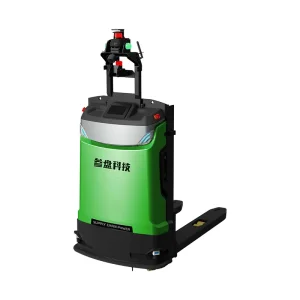
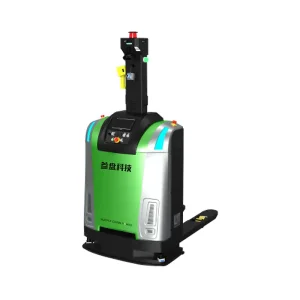
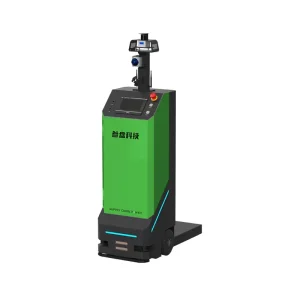
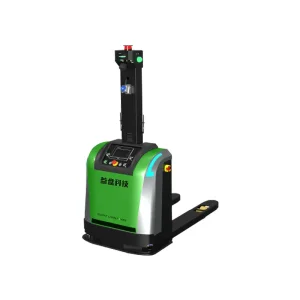
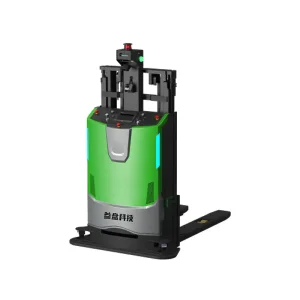
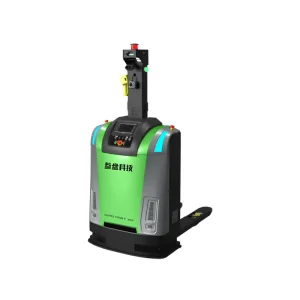
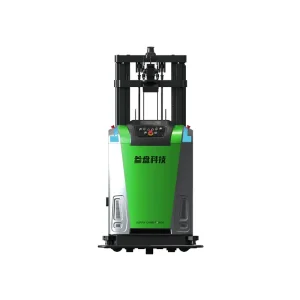
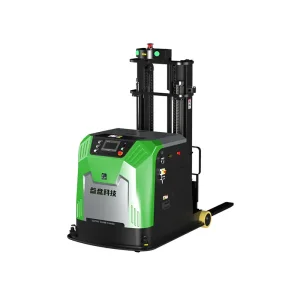
Modern distribution centers are squeezing aisle widths down to narrow (VNA) configurations to maximize storage density. Specialized equipment like the SFL-CDD15 is engineered specifically for narrow corridors, allowing for safe vertical lifting and stacking of loads up to 1500kg. Concurrently, heavy-duty applications demand units capable of handling payloads up to 3000kg (such as the SFL-CBD15-ZL), closing the gap between manual heavy-machinery operations and autonomous fleets.
3. Fleet Orchestration and Software-Defined Intralogistics
Physical robots represent only a portion of the complete logistics equation. The integration of robots with high-level software architectures—specifically Warehouse Management Systems (WMS), Enterprise Resource Planning (ERP), and Supply Chain Control Towers—enables real-time data visibility, path-routing coordination, and predictive maintenance dispatching.
A strategic evaluation framework for supply chain directors, procurement managers, and operations executives.
Procurement must evaluate beyond the initial purchase price of smart forklifts. A comprehensive TCO model accounts for installation costs, system integration, software licensing, charging infrastructure, maintenance, and expected battery lifespan (LiFePO4 configurations).
Autonomous mobile equipment must adhere strictly to global safety protocols, including CE certifications, ISO 3691-4, and ANSI/ITSDF B56.5. This includes multi-layered safety layouts with safety LiDARs, obstacle bumper switches, and optical/acoustic warning units.
Modern fleets rarely operate in isolation. Procured systems must offer open API endpoints, supporting communication standards like VDA 5050 to seamlessly interface with existing WCS, fleet managers, and warehouse automation controls.
End-to-end applications designed to solve unique logistics challenges across diverse operating environments.
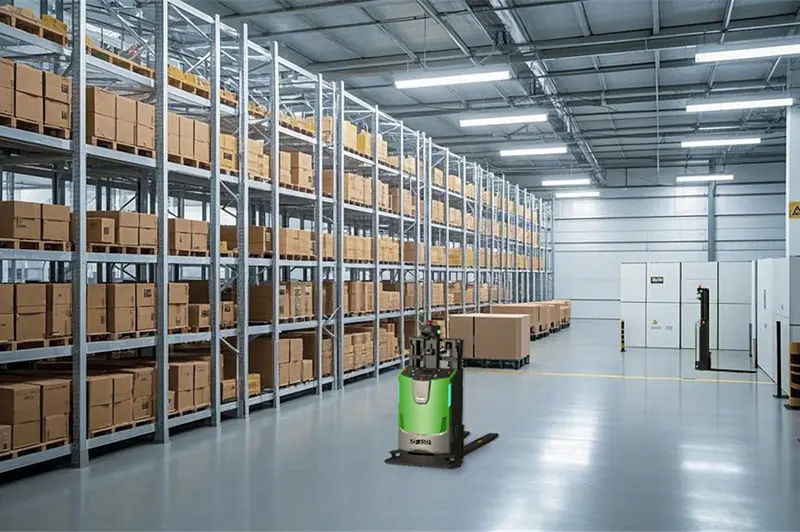
For operations facing space constraints, high-density warehousing solutions optimize spatial footprints. Integrating Laser SLAM stack-height smart forklifts (e.g., SFL-CDD16 or SFL-CDD14-H) with advanced racking systems allows businesses to transition from conventional storage formats to automated high-bay warehouses without modifications to existing floor layouts.
By employing narrow-width chassis designs and high-precision sensors, these systems safely navigate tight spaces, optimize vertical clearance, and minimize lane width requirements.
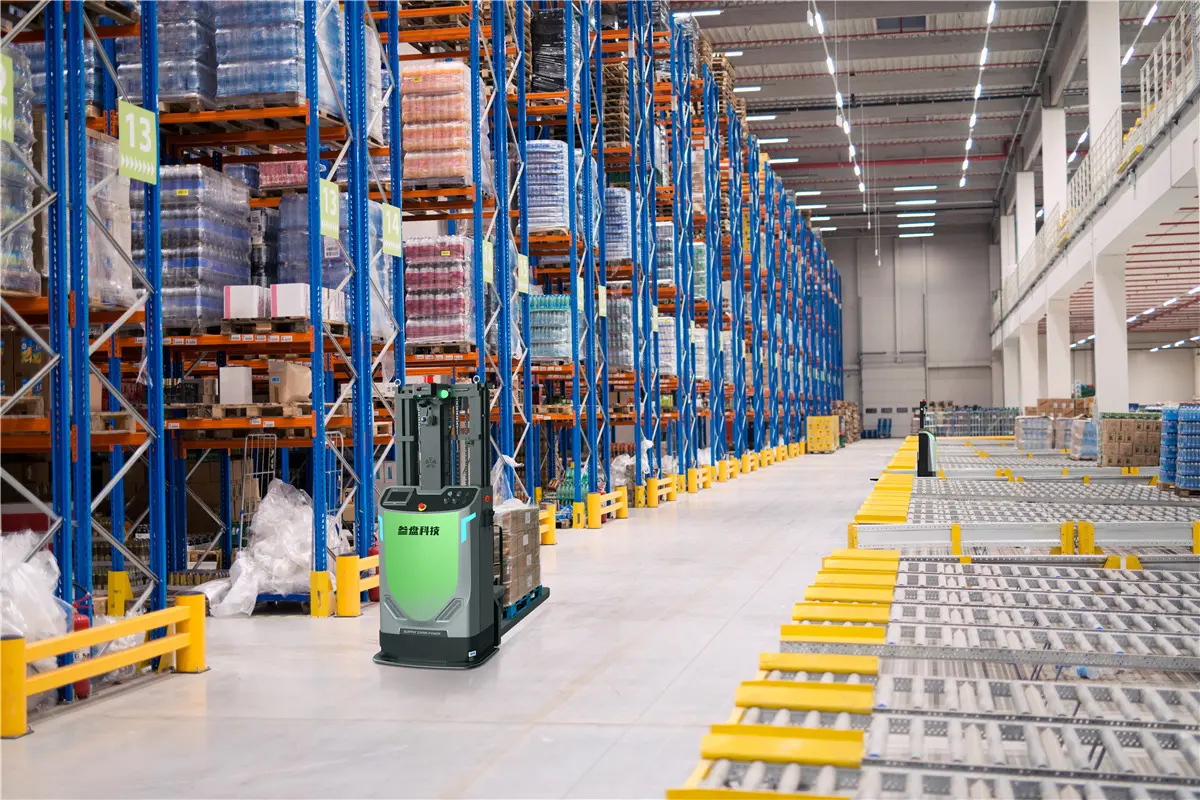
Building on New Hope Group’s deep operational experience, SCP focuses on providing comprehensive solutions for the food supply chain, as well as research and development of intelligent software and hardware products and services. The company aims to be based on the Internet of Things, AI, machine learning, intelligent devices and other technologies, through automated, digitized, intelligent and systematic technology products and solution matrices, to enhance the overall operational efficiency of supply chain procurement/supply/sales, and help upgrade the value of upstream and downstream industries.
This integration is crucial for industries requiring temperature-controlled compliance (cold chain), where tracking velocity and inventory turnaround times are paramount to safety and profitability.

Creating agile, flexible, and efficient end-to-end supply chain systems for modern enterprises.
Taking the actual business needs as the cornerstone, SCP is committed to comprehensively innovating and enhancing the overall supply chain planning of enterprises. We provide enterprises with comprehensive end-to-end supply chain solutions, build a multi-role and multi-dimensional intelligent supply chain collaboration system, and achieve all-round efficient collaboration and process optimization. At present, SCP has established a product architecture supported by software and hardware, and supplemented by the top-level design of the supply chain control tower to create an agile, flexible and efficient end-to-end supply chain system for enterprises.
Benefiting farmers and bringing welfare to consumers
Leading the technological upgrade of the supply chain and achieving extraordinary value for transformers
Alliance of Developers of New Quality Supply Chain Technology
As a subsidiary of New Hope Group, we have a good market reputation and execution ability. Moreover, we have an in-depth understanding of multiple industries.
We were incubated based on the digital needs of the business side within the New Hope system, and have participated in many projects of the same type. Therefore, we have a better understanding of the actual business scenarios and demands.
We possess the self-development and integration capabilities for various systems in procurement, sales, and supply. We can well meet the individual needs of different customers.
We provide certain light consulting services alongside projects, covering multiple dimensions such as process optimization and assessment weight, to assist customers in the construction of digital transformation of their supply chains.
We have a professional delivery team for commercial projects. We actively respond to the personalized needs of customers and can ensure fast and high-quality delivery according to customer requirements.
Enabling green, intelligent, and efficient supply chain transformations for the future.
In terms of technology research and development, SCP continues to increase its investment and constantly optimize the product architecture supported by software and hardware and the top-level design of the supply chain control tower.
By strengthening the self-development and integration capabilities of various systems in procurement, sales, and supply, we continuously improve the technical level and competitiveness of our products and services. We build a solid foundation for the sustainable development of enterprises and the industry with leading technologies.
At the same time, we actively explore the application of cutting-edge technologies in the supply chain field, promote technological iteration and upgrading, and maintain a leading position in the industry in terms of technology.
In terms of ecological construction, relying on the rich industrial resources and extensive business layout of Caogenziben, SCP deeply explores the supply chain needs of multiple industries such as food consumption and creates solutions that are suitable for actual scenarios.
By empowering key links such as cold chain logistics, we promote the standardized management and efficiency improvement of the supply chain and facilitate the collaborative development of the entire industrial chain.
In addition, we actively carry out in-depth cooperation with overseas partners, absorb international advanced experience and technologies, expand the international market, enhance the global influence of the enterprise, and build a supply chain technology ecosystem with international competitiveness.
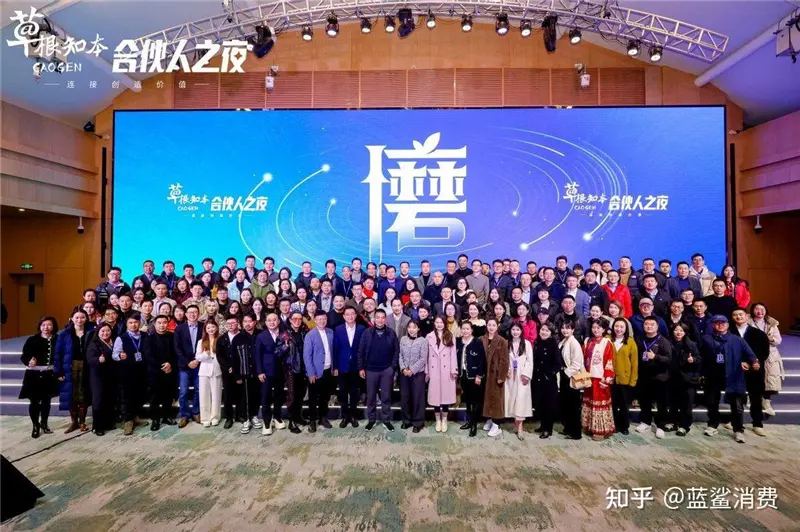
From a long-term development perspective, with the vision of "Leading the technological upgrade of the supply chain and achieving extraordinary value for transformers", SCP integrates the concept of sustainable development into its corporate strategic planning and daily operations.
We not only focus on our own growth and profitability but also look to promote the green, intelligent, and efficient development of the industry. We build a more perfect supply chain collaboration system for future enterprises.
While achieving our own sustainable development, we create greater value for society and become a backbone force in promoting the sustainable development of the supply chain technology industry.
The progression pathways toward fully autonomous, lights-out factory warehouse environments.
Moving beyond physical visual markers or floor tape. Robots use advanced LiDAR mapping to generate dynamic spatial matrix arrays, resolving localization with less than 10mm variance.
Integrating depth cameras, structural light sensors, and localized IMU feedback to establish deep spatial understanding. This allows forklifts to calculate real-time bypass maneuvers.
Deploying centralized multi-agent pathfinding systems. Robots communicate path reservations, dynamic battery thresholds, and target assignments under unified fleet controls.
AI-driven resource scheduling systems analyze business inflows to dispatch mobile robots and smart forklifts dynamically, minimizing staging area bottleneck conditions.
All smart forklift systems and hardware configurations undergo rigorous industrial safety, calibration, and environmental stress evaluations.
Resolving core technical questions regarding deployment safety, navigation parameters, and integration interfaces.
Conventional AGVs operate along predefined paths marked by magnetic tape or QR codes on the floor, stopping when obstacles block their trajectory. Laser SLAM (Simultaneous Localization and Mapping) AMRs dynamically construct maps of their working envelope. This allows them to navigate around obstacles by calculating alternative paths in real-time, eliminating the need to modify building layouts.
Specialized models like the SFL-CDD15 use optimized narrow-width chassis alongside high-precision obstacle detection systems. They leverage onboard optical sensors and vision algorithms to detect pallet pocket orientations, adjusting approach alignments to maintain high precision even in tight corridor spaces.
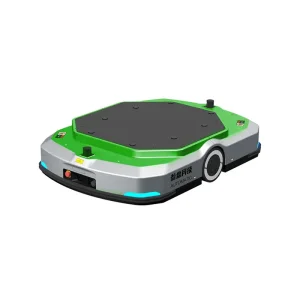
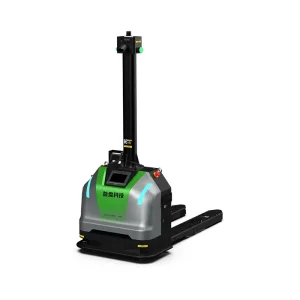
Yes. The mobile robot chassis platforms (such as the AMB-CSW10-BH) serve as modular structural bases designed for integration. They can support customized superstructures—including conveyor modules, mechanical arm attachments, or custom lifters—to transport payloads across assembly areas.
SCP’s product architecture provides web API interfaces that support standard operational protocols. This allows our fleet coordination system to translate incoming ERP orders directly into real-time routing commands, ensuring high-speed data flow and automated inventory tracking.
Engineered to perform in complex, high-traffic manufacturing corridors and demanding industrial environments.
 SCP
SCP