Why Are Order Picking Robots Important? The answer begins with a familiar warehouse scene: a worker crossing long aisles, scanning a shelf, and carrying a tote toward packing. Order Picking Robots can move goods, guide workers to items, or pick selected products automatically. Their value is practical, not magical. They can reduce unnecessary walking and help warehouses handle fluctuating order volumes.
The benefits depend on the task. A robot working beside shelving may bring a tote to a picker, while a robotic arm may grasp predictable items from a bin. Cameras, sensors, and software help these systems locate products and respond to obstacles. Still, irregular packaging, misplaced stock, and crowded aisles can disrupt performance. People remain essential for exceptions.
A useful perspective comes from UC Berkeley robotics researcher Ken Goldberg, whose work examines collaboration between people and robots. A cautious takeaway from that research is that automation should support human judgment, not erase it. That distinction matters. A well-planned system can reduce repetitive movement and help teams meet demand, but poor integration may add delays or complexity. Results depend on layout, inventory accuracy, maintenance, and worker training. Some tasks are still better done by hand. This article explores where Order Picking Robots fit, what benefits they can offer, and which trade-offs warehouse leaders should weigh before investing.
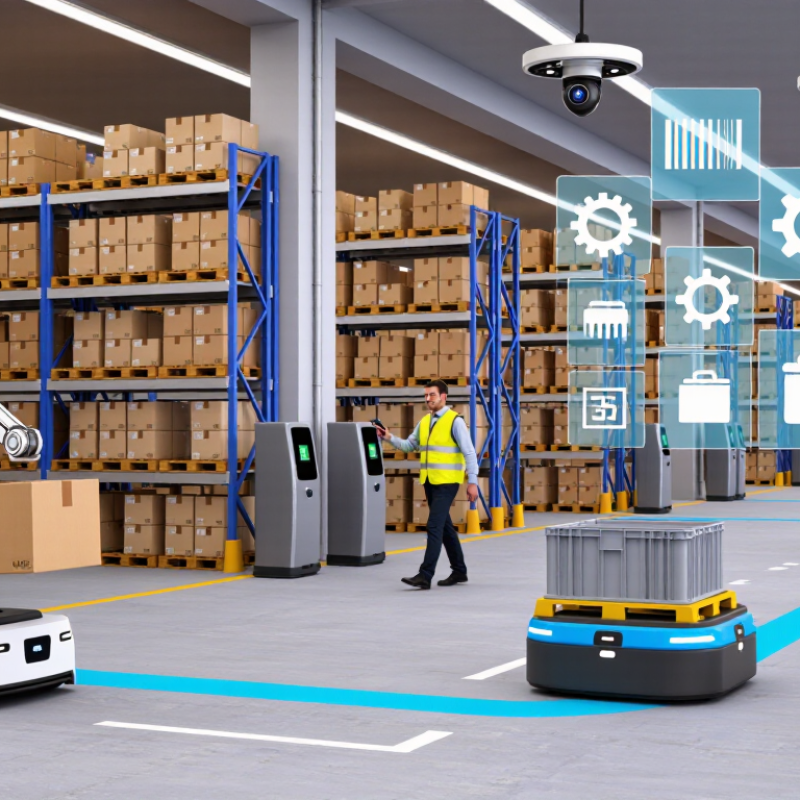
Order picking robots support several different warehouse workflows. Autonomous mobile robots can carry totes or carts between storage areas and packing stations. Goods-to-person systems bring shelves or bins to a fixed picking point, reducing repeated walking. Robotic arms handle selected items, especially when products have predictable shapes and packaging. Each type solves a different problem. The right choice depends on order volume, item variety, aisle space, and how often the layout changes.
Their tasks range from moving completed totes to presenting inventory and assisting with individual item selection. A mobile robot may follow a marked route, pause at a station, and signal when it needs a tote loaded. A picking arm may use cameras and grippers to identify and lift an item, though soft bags and reflective packaging can be difficult. Not every item cooperates. Workers still check exceptions, replenish stock, and handle objects the system cannot reliably grasp. That matters. A warehouse that looks efficient on a screen may develop congestion near packing stations. Teams should test real products and peak-hour traffic before expanding automation; small workflow problems can be easy to miss in a quiet trial.
| Robot Type | How It Supports Picking | Typical Warehouse Tasks | Suitable Inventory | Key Benefits | Operational Considerations |
|---|---|---|---|---|---|
| Autonomous mobile robot (AMR) | Moves totes, carts, or shelves between storage, picking, and packing areas. In many workflows, a person still selects the items. | Goods-to-person transport, tote movement, replenishment runs, and delivery of completed orders to packing stations. | Items stored in compatible totes, bins, carts, or movable shelving. | Can reduce walking between locations and can navigate around obstacles using onboard sensors and facility maps. | Requires suitable routes, charging arrangements, traffic-management rules, and integration with warehouse software. |
| Automated guided vehicle (AGV) | Follows a defined route to transport carts, pallets, or containers through the warehouse. | Repetitive movement of picked orders, replenishment stock, and materials between fixed work areas. | Loads that can be placed securely on the vehicle or a compatible carrier. | Can automate frequent, predictable transport tasks and help limit manual material handling. | Works best where routes and traffic patterns are predictable; route changes may require system or facility adjustments. |
| Robotic piece-picking arm | Uses a gripper, sensors, and control software to identify and pick individual items from a defined presentation area. | Picking items into order totes, sorting products, and transferring items between conveyors and containers. | Items with shapes, packaging, and surface characteristics that the system can reliably detect and grasp. | Can perform repetitive item handling and operate at a fixed workstation for extended periods. | Performance depends on item variety, presentation, graspability, and exception handling; unusual or fragile items may need human review. |
| Autonomous case-handling robot | Moves or retrieves cases from storage locations and brings them to a picking or dispatch area. | Case picking, storage retrieval, order consolidation, and movement of cartons in high-volume operations. | Standardized cases or cartons that meet the system's size, weight, and handling limits. | Can support dense storage and reduce manual travel for repetitive case movements. | Requires compatible storage infrastructure, accurate inventory data, and defined case specifications. |
| Collaborative mobile picking robot | Travels with a picker and presents order information or compartments for sorting picked items. | Zone picking, batch picking, order sorting, and multi-order collection across warehouse aisles. | Mixed small- to medium-sized items that can be placed in bins or compartments. | Can help organize multiple orders during a picking route and reduce trips back to a central sorting area. | Needs clear interaction procedures, safe shared-space practices, and accurate order and location instructions. |
| Automated storage and retrieval system (AS/RS) | Automated equipment stores and retrieves bins, totes, or trays, often presenting them at a goods-to-person workstation. | Bin retrieval, replenishment, order picking support, and storage of small parts or case goods. | Inventory stored in containers compatible with the system's racks, shuttles, or retrieval equipment. | Can make better use of vertical storage space and bring selected inventory to stationary operators. | Requires purpose-built infrastructure, careful capacity planning, and reliable coordination with inventory and order systems. |
Mobile robots carry totes or carts. Goods-to-person systems bring shelves or bins to fixed stations. Robotic arms pick selected items.
They move totes between storage areas and packing stations. Some follow marked routes and pause for workers to load them.
It brings shelves or bins to a fixed picking point. Workers can spend less time walking long aisles.
No. Cameras and grippers can handle predictable items, but soft bags and reflective packaging may cause trouble. Not every item cooperates.
Workers replenish stock, check exceptions, and handle items robots cannot grasp reliably. Those tasks can be easy to underestimate.
Order volume, item variety, aisle space, and layout changes all matter. Test with real products, not just sample boxes.
Test actual order patterns and peak-hour traffic. Watch for queues near packing stations; small delays can erase time saved elsewhere.
Not necessarily. One 2024 industry survey found that 55% of respondents planned to increase technology investment. Spending could go to software or sensors instead. Plans are not installs.
There were 553,052 industrial robot installations worldwide, up 5% from 2021. The figure covers many industries and robot types, not picking alone. That distinction matters.
Order Picking Robots are important because they help warehouses handle the labor-intensive work of locating, retrieving, and moving items for orders. Picking can account for up to 55% of warehouse operating costs, so improving this process can reduce wasted travel and support faster, more consistent fulfillment. Depending on the task, facilities may use mobile robots to move shelves or totes, robotic arms to pick items, or automated systems that bring products to workers.
Robotics can also increase storage capacity, with one 2022 report describing gains of up to 40%, while growing interest in technology investment reflects the pressure to improve efficiency and scale. Successful adoption depends on choosing a system that fits order profiles, product types, warehouse layout, and worker-safety needs. Careful integration with existing processes helps ensure that robots complement staff and deliver practical, lasting benefits.

 SCP
SCP