Why Choose an Automated Cart System for Your Business?

Time:2026-10-13 Author:Aria
0%

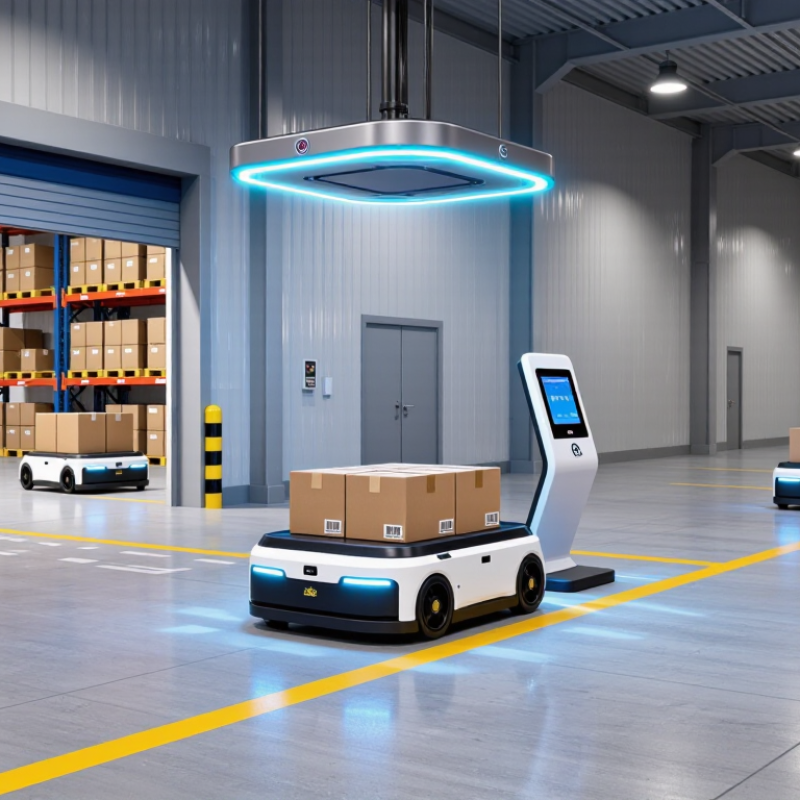
Choosing an Automated Cart System can reshape how goods move through a warehouse, store, or production facility. Instead of pushing heavy loads manually, employees can guide carts that follow mapped routes, sensors, or digital commands. A typical shift may involve fewer walking miles, smoother handoffs, and more consistent delivery times. The difference becomes visible near loading areas, where labeled carts arrive with fewer delays.

Bill Gates, a prominent technology and business expert, once said, “The first rule of any technology used in a business is that automation applied to an efficient operation will magnify the efficiency.” His point remains practical. Automation cannot repair unclear workflows. It often exposes them. A reliable Automated Cart System should support a well-designed process, not disguise a weak one.

The strongest business case usually combines safety, labor efficiency, tracking, and scalability. Sensors can help carts slow near people or stop before obstacles. Software can record movement, reduce misplaced items, and reveal recurring bottlenecks. These details matter during busy periods, when one missed delivery can interrupt an entire line. However, the purchase should not depend on excitement alone. Floor space, cart capacity, battery life, maintenance access, and worker training require careful review.

Small trials help. Measure travel time, picking accuracy, interruptions, and employee feedback before expanding. The numbers may disappoint at first. That is useful information. A system that performs well in a controlled demonstration may struggle around narrow aisles or changing priorities. Choosing carefully creates a safer, more predictable operation, while leaving room for human judgment where automation still falls short.
Why Choose an Automated Cart System for Your Business?

What Is an Automated Cart System?

What Is an Automated Cart System?

An automated cart system is a mobile transport solution that moves goods through a workplace with limited manual pushing. It usually combines carts, sensors, navigation software, and a fleet management platform. The system can follow mapped routes, avoid obstacles, and stop at defined stations. In a warehouse, it may carry cartons from storage racks to packing areas. In a hospital, it may transport sealed supplies between departments. Human workers still load, unload, and supervise key steps.

The main value is consistency. Carts can repeat routine journeys during busy shifts, reducing walking time and unnecessary handling. In practical use, clear floor markings, reliable charging points, and well-designed handoff areas matter as much as the vehicle itself. A poorly planned route can create delays instead of removing them. That part is easy to underestimate. Automated carts also need maintenance, staff training, and safety checks. They are not a complete replacement for human judgment.

Tips: Start with one repetitive route. Measure travel time, loading errors, and worker feedback before expanding. Keep emergency access clear, and review the system after real operating conditions reveal weaknesses. A small pilot may feel slower at first, but it often exposes problems that a larger launch would make expensive.

How Automated Cart Systems Operate

An automated cart system moves goods through a facility without constant manual pushing. Its operation begins with a task request from inventory or warehouse software. The system assigns a cart, creates a route, and sends it to a pickup point. Sensors scan floor markers, shelves, and nearby workers. Cameras or laser sensors help the cart detect obstacles. When the path changes, onboard controls slow, stop, or recalculate movement. This process is visible in practice: a cart can collect a tote, wait at a crossing, and deliver it to packing.

At the destination, position sensors confirm alignment before the cart unloads. Some carts use lifts, rollers, or small conveyors for the transfer. A central dashboard records location, battery level, task status, and delays. Charging stations can restore power during scheduled breaks or low-demand periods. Safety depends on speed limits, warning lights, emergency stops, and clear pedestrian zones. Human operators still handle exceptions, damaged loads, and unusual floor conditions. That matters. A dusty sensor or uneven threshold can reduce accuracy. Early trials should measure missed scans, waiting time, and manual interventions, not just travel speed. Practical experience suggests that the strongest deployment is not always the most complex. It is the one staff can understand, inspect, and correct when real workflows become messy.

Key Benefits for Business Operations

Why Choose an Automated Cart System for Your Business?

Key Benefits for Business Operations

An automated cart system can move materials between storage areas, workstations, and packing zones with steady timing. This reduces unnecessary walking and helps employees focus on quality checks, assembly, and customer orders. In daily operations, predictable transport also supports smoother shift planning. Fewer interruptions matter.

The operational value becomes clearer when tasks repeat every hour. Carts can follow defined routes, pause at loading points, and deliver supplies when needed. This may reduce misplaced items and improve workplace visibility. However, automation is not magic. A poor layout, unclear instructions, or weak maintenance planning can create delays instead of removing them. Test one busy route first. Review actual results before expanding.

Tips: Map frequent material movements, measure delivery times, and involve floor employees before installation. Keep clear pedestrian paths and schedule routine inspections. Data from the system can reveal bottlenecks, but managers still need practical judgment. A dashboard cannot explain every delay. Leave room for adjustments as products, staffing, and order volumes change.

Factors to Consider Before Adoption

Why Choose an Automated Cart System for Your Business?

Before adoption, examine your operation rather than copying a competitor. An automated cart system can reduce repetitive transport between storage, production, and packing areas. However, its value depends on route length, load weight, floor conditions, and daily order volume. MHI’s 2024 Annual Industry Report found that 55% of surveyed supply-chain leaders planned to increase technology investment. It also reported that 83% viewed digital supply chains as a competitive advantage. Those figures support investment, but they do not guarantee payback.

Measure your current process carefully. Record walking distance, delivery delays, picking errors, labor hours, and peak-season demand. Then compare those figures with the system’s capacity, charging time, navigation limits, integration needs, and maintenance costs. Safety deserves equal attention. Review emergency stops, pedestrian crossings, operator training, and traffic rules before installation. A small pilot area can reveal problems that spreadsheets miss. Real floors are rarely perfect. Dust, narrow corners, and changing inventory can challenge performance.

Tips: Start with one repeatable route. Define success using measurable targets. Ask staff to test the controls. Include software updates and battery replacement in the budget. The International Federation of Robotics reported 541,302 industrial robots were installed worldwide in 2023, showing strong automation momentum. Still, adoption is not maturity. A system may move carts efficiently while creating new bottlenecks at packing stations. Review the results weekly, and be willing to redesign the workflow.

Why Choose an Automated Cart System for Your Business?

Before adoption, businesses should compare the factors that most directly affect throughput, operating cost, safety, and long-term scalability. The weighting below is a practical starting point for a site-specific evaluation and should be adjusted using real warehouse data.

Key takeaway: A successful automated cart project depends not only on labor productivity, but also on throughput capacity, system integration, safety requirements, scalability, and total cost of ownership.

Common Business Applications and Future Developments

Why Choose an Automated Cart System for Your Business?

Common Business Applications and Future Developments

Automated carts now support warehouses, hospitals, factories, retail stores, airports, and large campuses. In warehouses, carts carry bins between storage aisles and packing stations. This reduces walking time and keeps routine workflows more consistent. In hospitals, they may move linens, meals, or sealed supplies through approved routes. Staff can then spend more time with patients and less time pushing heavy loads.

Manufacturing sites use carts to deliver components at scheduled intervals. Retail operations can use them for backroom replenishment and stock movement. Their value depends on clear routes, reliable sensors, and trained employees. The system is not magic. Narrow aisles, crowded floors, and poor layout planning can still stop progress. Small pilots matter. They often reveal problems that planning documents miss.

Future systems will likely combine better mapping, fleet coordination, and safer human detection. Energy-efficient batteries may support longer shifts with shorter charging periods. Predictive software could identify delays before they affect production. Yet automation should remain adjustable. Workers need accessible controls when conditions change. Data security also deserves careful attention in shared facilities. Some early deployments may cost more than expected. That uncomfortable lesson can improve later decisions.

Why Choose an Automated Cart System for Your Business? - Common Business Applications and Future Developments

Business Application Typical Workflow Common Cart Load Typical Travel Reduction Primary KPI Business Value
E-commerce order fulfillment Goods-to-person or person-to-goods picking, sorting, packing, and dispatch 50–250 kg 30–60% Orders picked per labor hour Supports peak-period capacity and reduces unnecessary walking
Retail store replenishment Transport of cartons, totes, and shelf-ready inventory from backroom to sales floor 100–500 kg 20–40% Replenishment time per aisle or zone Improves shelf availability while allowing employees to focus on customers
Manufacturing line-side delivery Scheduled delivery of components, tools, packaging, and work-in-process materials 200–1,000 kg 15–35% Material delivery punctuality Reduces line-side stockouts and standardizes internal logistics
Healthcare and hospital logistics Movement of medicines, sterile supplies, meals, linens, and waste between departments 50–300 kg 20–45% Delivery time and traceability rate Improves traceability and helps staff spend more time on patient care
Third-party logistics operations Multi-client picking, consolidation, cross-docking, and outbound staging 100–750 kg 25–50% Throughput per square meter Provides flexible capacity for changing client volumes
Cold-chain and food distribution Timed movement of temperature-sensitive totes and cases through storage and dispatch areas 100–600 kg 15–35% Temperature compliance and order cycle time Shortens exposure time outside controlled storage zones
Returns processing Collection, inspection, grading, repacking, and routing of returned items 50–300 kg 25–45% Return-to-stock processing time Accelerates resale, repair, recycling, or disposal decisions
Future: Fleet orchestration Software coordinates multiple carts, assigns tasks, and balances traffic across work zones Mixed-load fleets Expected to improve Fleet utilization and task completion time Enables scalable automation without assigning one vehicle to one task
Future: AI-assisted navigation Real-time route adjustment using sensors, facility maps, and changing work conditions Application-dependent Variable Avoidance events and route efficiency Improves performance in dynamic environments shared with people
Future: Energy-aware operations Battery monitoring, opportunity charging, and task scheduling based on energy demand Application-dependent Not applicable Energy consumed per completed task Reduces downtime and supports lower-emission warehouse operations

Note: Load capacities and travel-reduction figures are indicative planning ranges for automated cart projects. Actual results depend on vehicle design, facility layout, payload type, traffic rules, order profile, and software integration.

FAQS

What is an automated cart system?

It moves goods through workplaces with limited manual pushing. It combines carts, sensors, navigation software, and fleet management. Workers still load, unload, and supervise important steps.

Where can automated carts be used?

Warehouses may move cartons from storage racks to packing areas. Hospitals may transport sealed supplies between departments. Routes should be predictable and repeatable.

What benefits can an automated cart system provide?

It can repeat routine journeys during busy shifts. Workers may spend less time walking and handling goods. Consistent movement is the main benefit.

What factors should a business examine before adoption?

Review route length, load weight, floor conditions, and daily order volume. Measure delays, walking distance, picking errors, and labor hours. Real floors can be surprisingly difficult.

How should a business begin implementation?

Start with one repetitive route. Track travel time, loading errors, and worker feedback. A small pilot may feel slower at first. That can be useful.

What safety issues require attention?

Keep emergency access clear. Review emergency stops, pedestrian crossings, traffic rules, and operator training. Human supervision remains necessary near changing work areas.

What costs should be included in the budget?

Include charging points, maintenance, software updates, battery replacement, training, and system integration. The vehicle is only part of the expense. This is easy to miss.

Can automated carts completely replace human workers?

No. People still handle loading, unloading, supervision, and judgment. The system supports routine transport. It does not understand every unusual situation.

How can a business measure whether the system works?

Compare travel time, delivery delays, handling errors, labor hours, and peak-season performance. Review results weekly. A faster cart can still create packing-station bottlenecks.

What problems might appear after installation?

Dust, narrow corners, changing inventory, and weak handoff areas may reduce performance. Poor routes can create delays instead of removing them. The original plan may need revision.

Conclusion

An Automated Cart System is a technology-driven solution that moves goods, supplies, or equipment through a workplace with minimal manual handling. Using sensors, software, and guided routes, it can transport items between designated locations, coordinate with existing workflows, and adjust movement based on changing operational needs. This helps businesses improve material flow while reducing repetitive tasks and unnecessary delays.

Adopting an Automated Cart System can increase efficiency, support safer working conditions, improve inventory movement, and provide more consistent service. Before implementation, businesses should evaluate facility layout, load requirements, integration needs, maintenance, employee training, and total operating costs. These systems can serve warehouses, manufacturing facilities, healthcare environments, retail operations, and other organized workplaces. As technology develops, future systems may offer better navigation, greater flexibility, stronger data analysis, and more intelligent coordination with other business processes.


Aria

Aria

Aria is a dedicated marketing professional with a deep passion for innovative strategies and a keen understanding of our company's product offerings. With a wealth of experience in the industry, Aria excels at crafting engaging content that highlights the unique features and benefits of our......