Robotic Handling Systems are becoming practical infrastructure for manufacturers, warehouses, and distribution centers worldwide. The International Federation of Robotics reported 541,302 industrial robots installed globally in 2023, with more than 4.28 million units operating worldwide. These figures show strong adoption, but they do not guarantee the right solution for every factory. A robot lifting cartons may fail where food-grade sanitation, delicate products, or narrow aisles dominate daily work.
This guide examines the Top 10 Types of Robotic Handling Systems for Global Buyers. It covers articulated robots, cobots, delta robots, gantry systems, autonomous mobile robots, robotic palletizers, depalletizers, and specialized picking platforms. Each system differs in payload, reach, speed, accuracy, integration complexity, and maintenance requirements. Interact Analysis has also identified continued growth in warehouse automation, driven by labor shortages, e-commerce demand, and pressure for faster order fulfillment. The commercial reality is less simple. Fit matters more.
Reliable purchasing decisions require more than comparing advertised cycle times. Buyers should examine product geometry, conveyor speeds, gripper performance, software compatibility, operator training, spare-parts access, and local service coverage. The ISO 10218 safety framework and ISO/TS 15066 guidance provide useful references for industrial robot and collaborative robot applications. However, standards alone cannot replace a site-specific risk assessment. This overview combines industry data with practical selection considerations, helping global buyers compare technologies with clearer expectations. Some rankings remain debatable, because the “best” system depends on the product, process, and people operating it. The market is moving. Careful validation still matters.
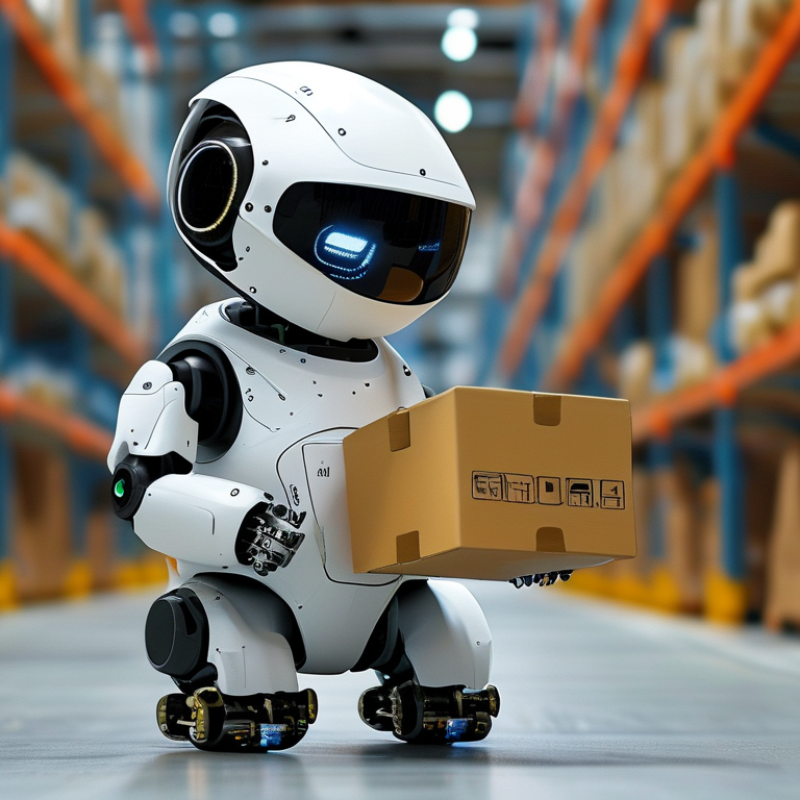
Robotic handling systems combine a robot, end-effector, sensors, controls, and safety equipment. They move, orient, load, unload, or place materials with repeatable accuracy. A gripper may hold a carton, metal part, food tray, or fragile component. The system is more than the arm.
The International Federation of Robotics reported 541,302 industrial robots installed worldwide in 2023. This figure includes many handling applications across factories and warehouses. Buyers commonly classify systems by robot structure, payload, reach, speed, and motion. Articulated robots offer flexible movement. SCARA robots suit fast horizontal assembly and picking. Delta robots handle lightweight products at high speed. Gantry systems cover large, rectangular workspaces. Collaborative systems focus on closer human interaction, but their real suitability depends on risk assessment.
A second classification uses the handling task. Common categories include pick-and-place, palletizing, depalletizing, machine tending, packaging, bin picking, and sorting. Vision guidance helps locate irregular objects. Force sensing helps prevent damage during insertion or gripping. Fixed-position systems often deliver stable cycle times. Mobile handling systems provide greater layout flexibility. They can also create harder integration problems.
The taxonomy is not perfectly clean. A palletizing cell may include vision, conveyors, and two robots. A machine-tending system may also perform inspection. The World Robotics data measures robot installations, not complete handling cells. That distinction matters when comparing supplier quotations. Buyers should check payload at full reach, actual cycle time, changeover steps, maintenance access, and safety validation. A compact cell can look efficient on paper, yet fail beside a crowded production line. Practical experience still exposes gaps that specifications hide.
Top 10 Types of Robotic Handling Systems for Global Buyers
Articulated, Cartesian, and SCARA robots dominate many material movement projects. They handle cartons, trays, components, and packaged goods with different strengths. Other common systems include delta, gantry, cylindrical, polar, collaborative, mobile, and vision-guided robots.
Articulated robots offer flexible reach around fixtures, conveyors, and pallet layers. Their multi-axis arms can load irregular products into changing layouts. They suit demanding paths, but installation requires careful safety zoning and operator training. Cartesian robots move along straight X, Y, and Z axes. Their motion is predictable and easy to program. They work well for palletizing, machine loading, and overhead transfer tasks. A rigid frame can improve repeatability, although it may limit floor-space flexibility.
SCARA robots excel at fast horizontal movement and precise vertical insertion. They commonly transfer small parts between conveyors, presses, and inspection stations. Their compact footprint helps where production space is limited. However, high speed does not solve every handling problem. Heavy loads, unstable products, or poor gripping surfaces may reduce real performance. In plant assessments, I check payload at full reach, not only the advertised maximum. I also examine cycle time with real packaging, cable routing, and maintenance access. Specifications can look excellent on paper. Actual cartons may shift, deform, or arrive unevenly. That detail deserves testing before a global purchase.
Global buyers often compare robotic handling systems by speed, flexibility, and installation effort. Delta robots suit fast picking of lightweight products, such as cartons, pouches, and small components. A vision system can identify mixed items on a moving conveyor. Proper gripper design still matters. A weak vacuum seal can cause dropped products and costly pauses.
Collaborative robots support handling tasks near trained operators. They can load machines, pack parts, or move containers between workstations. Their force limits do not remove the need for risk assessment. Payload, reach, tooling, and unexpected movements must be tested together. Mobile robots add flexible transport inside warehouses and factories. They can follow mapped routes, deliver bins, and connect separate work cells without fixed conveyors.
Other useful system types include articulated robots, gantry robots, palletizing systems, and autonomous guided vehicles. Each option depends on product weight, floor conditions, traffic, and required cycle time. In practical projects, buyers should request measured throughput rather than rely on impressive demonstrations. Start small. A pilot can reveal blocked routes, poor lighting, unstable packaging, or uncomfortable operator access. These details are easy to miss during planning. No layout is perfect. Teams may need to adjust gripper fingers, charging points, safety zones, or software permissions after real production begins. Maintenance access also deserves attention, because a system that handles products quickly but takes hours to service may reduce the expected return.
| Robotic Handling System | Typical Robot Structure | Typical Payload Range | Typical Reach or Travel | Typical Throughput | Degrees of Freedom | Best-Fit Handling Tasks | Main Advantages | Key Selection Considerations |
|---|---|---|---|---|---|---|---|---|
| Delta Parallel Robot | Parallel-arm mechanism mounted above the work area | 0.1–15 kg | 400–1,600 mm working diameter | 60–300 picks/min | 3–4 axes | High-speed picking, sorting, counting, packing, and primary packaging of lightweight products | Very high speed, low moving mass, and excellent repeatability | Requires overhead installation; payload, product size, and reach are more limited than those of articulated robots |
| Collaborative Robot | Force-limited articulated arm designed for monitored human–robot collaboration | 3–30 kg | 500–1,800 mm | 10–30 picks/min | 6–7 axes | Machine tending, kitting, light palletizing, bin picking, inspection, and flexible line-side handling | Quick deployment, small footprint, easy redeployment, and reduced need for fixed guarding in suitable applications | Usually slower than industrial robots; a risk assessment, approved tooling, and application-specific safety validation remain necessary |
| Six-Axis Articulated Robot | Serial rotary-arm configuration with multiple jointed axes | 3–300 kg | 600–3,200 mm | 10–35 cycles/min | 6 axes | General material handling, machine loading, assembly transfer, packaging, and multi-angle part placement | Large working envelope, strong orientation flexibility, and broad tooling compatibility | Needs guarding and safety controls in many installations; floor space, programming, and integration effort can be significant |
| SCARA Robot | Horizontal articulated arm with selective compliance in the vertical assembly direction | 1–20 kg | 400–1,000 mm | 30–100 cycles/min | 4 axes | Fast pick-and-place, component insertion, small-part assembly, tray loading, and packaging | Fast horizontal motion, compact footprint, and strong repeatability for planar handling | Less suitable for complex three-dimensional orientations or tasks requiring many approach angles |
| Cartesian Gantry Robot | Linear X–Y–Z axes supported by a frame, gantry, or overhead structure | 5–1,000 kg | 0.5–10 m per axis | 5–40 cycles/min | 3–5 axes | Large-format transfer, pallet loading, machine tending, storage retrieval, and heavy-part handling | High payload capacity, predictable linear motion, scalable travel, and straightforward path planning | Requires a dedicated structure and installation space; limited dexterity compared with articulated systems |
| Palletizing Robot | High-payload articulated arm or purpose-built palletizing configuration | 20–300 kg | 1,500–3,200 mm | 10–25 cases/min | 4–6 axes | Case palletizing, bag handling, carton stacking, layer forming, and depalletizing | Handles repetitive heavy loads and supports consistent pallet patterns and layer quality | End-of-arm tooling, pallet pattern, load stability, conveyor synchronization, and safety fencing must be engineered together |
| Autonomous Mobile Robot | Wheeled autonomous vehicle using onboard navigation and fleet software | 100–1,500 kg | Facility-wide navigation; typically 1–2 m/s | Route-dependent | 2–4 drive degrees of freedom | Line-side replenishment, warehouse transport, tote movement, work-in-process transfer, and order staging | Flexible routes, reduced fixed conveyor infrastructure, and scalable point-to-point logistics | Requires suitable floor conditions, traffic management, charging strategy, interface integration, and reliable mapping |
| Mobile Manipulator | Autonomous mobile base combined with a robotic arm and optional vision system | Arm payload commonly 3–20 kg | Base-dependent; arm reach commonly 700–1,500 mm | Application-dependent | 8–10 or more combined axes | Mobile machine tending, warehouse picking, flexible kitting, inspection, and multi-station handling | Combines navigation with dexterous manipulation and can serve multiple workstations | More complex than a fixed robot; localization, obstacle avoidance, battery life, reachability, and safe interaction require validation |
| Vision-Guided Picking Robot | Industrial or collaborative arm integrated with 2D, 3D, or depth vision | 1–50 kg | 600–2,500 mm | 10–80 picks/min | 4–7 axes | Random bin picking, depalletizing, parcel handling, sorting, quality inspection, and mixed-SKU picking | Adapts to variable positions, shapes, and orientations with reduced mechanical fixturing | Performance depends on lighting, surface reflectivity, occlusion, grasp selection, camera calibration, and data quality |
| Cylindrical Robot | Rotary base with vertical and radial linear motion | 2–50 kg | 500–1,500 mm radial reach | 15–50 cycles/min | 3–4 axes | Machine loading, assembly transfer, die handling, insertion, and handling around cylindrical work envelopes | Efficient use of floor space, simple motion architecture, and good access around a central work area | Lower flexibility for complex orientations; less common for modern high-mix applications than articulated or collaborative systems |
Palletizing, packaging, and bin-picking systems now serve different handling problems. Palletizing robots build stable loads from cartons, sacks, or trays. Packaging robots place products into cases, pouches, or display packs. Bin-picking systems use vision to locate randomly placed parts. Their value depends on product variation, cycle time, and gripper accuracy.
The International Federation of Robotics reported 541,302 industrial robot installations worldwide in 2023. Deloitte’s 2024 Smart Manufacturing Survey found that 86% of manufacturers view smart manufacturing as a key competitiveness driver. These figures support investment, but automation is not automatically efficient. A palletizer may meet its speed target yet damage unstable cartons. A bin-picker may recognize parts but struggle with reflective surfaces. Real production trials expose these gaps.
Tips: Measure the complete cycle, not only robot motion. Check payload, reach, end-of-arm tooling, vision performance, and changeover time. Leave space for maintenance access. The first gripper choice is often wrong. Test dusty, wet, and poorly oriented products before approval. Safety design should cover guarding, access points, emergency stops, and operator training. A small packaging line may need flexibility more than maximum speed. Specification sheets rarely show that difference.
Global buyers compare more than robot speed. They assess capacity, safety, integration, and total ownership cost. The ten common types include articulated robots, SCARA units, delta robots, Cartesian systems, gantry robots, collaborative robots, autonomous mobile robots, automated guided vehicles, palletizing cells, and machine-tending systems.
Capacity depends on payload, reach, cycle time, and product variation. A delta robot can move small packages quickly, while a gantry system suits heavy loads across wide workspaces. Articulated robots offer flexible handling, but they often need larger safety zones. Collaborative systems may simplify access, yet their reduced speed can limit output.
That figure shows strong demand, but it does not prove every application needs a high-speed cell. Buyers should test real products, including slippery cartons and uneven trays.
Safety comes before impressive specifications. Risk assessments should follow applicable machinery rules and ISO 10218 guidance. Integration costs can include vision systems, conveyors, guarding, software, training, and site validation. These items are easily underestimated.
Tips: Compare cost per handled unit, not purchase price alone. Request a cycle-time test using your actual packaging. Check spare-part availability, technician response, and software compatibility. A cheaper system may become expensive after one difficult integration. My own caution: supplier data often reflects ideal conditions. Question it.
: Delta systems suit fast picking of lightweight cartons, pouches, and small parts. Articulated, gantry, and Cartesian systems handle broader weight and reach requirements. The best choice depends on product variation, floor space, and cycle time.
They can load machines, pack parts, or move containers near trained operators. Their force limits do not remove the need for risk assessment. Test payload, reach, tools, and unexpected movements together.
Mobile robots can deliver bins between workstations. They may follow mapped routes and connect separate work cells. Blocked aisles, traffic, and charging locations can create problems.
Palletizing systems build stable loads from cartons, sacks, or trays. They must handle real packaging, not only perfect sample boxes. Unstable cartons may fall despite impressive cycle speeds.
Test vision performance on randomly placed, reflective, dusty, or poorly oriented parts. The gripper must hold each shape securely. Recognition alone is not enough.
Compare payload, reach, cycle time, product variation, and changeover time. Measure complete cycles, including gripping, placement, and delays. Robot motion alone can look faster than production reality.
Review guarding, access points, emergency stops, operator training, and safety zones. Collaborative operation still requires practical risk assessment. Safety comes before speed.
Include vision, conveyors, tooling, software, training, maintenance, and site validation. Check spare parts, technician response, and software compatibility. A low purchase price may become expensive later.
A small pilot can reveal poor lighting, blocked routes, weak vacuum seals, and awkward access. It also tests charging points and maintenance space. No layout is perfect.
Do not rely only on supplier demonstrations or specification sheets. Use actual products, including slippery cartons and uneven trays. The first gripper choice may be wrong.
Robotic Handling Systems are automated solutions designed to move, position, sort, package, and organize materials with greater speed, precision, and consistency. They can be classified by structure, movement, payload, working range, and level of human interaction. Articulated, Cartesian, and SCARA robots are commonly used for material movement, while delta robots support fast picking and placement. Collaborative robots are suited to flexible workspaces where people and machines operate near each other, and mobile robots help transport materials across changing production environments.
Specialized systems extend these capabilities to palletizing, packaging, and bin-picking tasks. When comparing options, global buyers should evaluate payload capacity, reach, cycle time, accuracy, safety functions, maintenance needs, software compatibility, and integration with existing equipment. Total cost should include installation, training, energy use, upgrades, and long-term service. Selecting the right system requires balancing operational goals with workplace requirements, product variety, facility layout, and future expansion plans.

SCP