Buying a Storage Robot is not simply a technology upgrade. It is a decision about space, people, inventory, safety, and long-term operating costs. A robot that performs well in a supplier’s showroom may struggle in a humid warehouse, a narrow aisle, or a facility with uneven flooring. Global buyers need evidence that matches their actual working environment.
A practical evaluation should begin with measurable details. Check payload capacity, robot speed, storage density, battery performance, charging methods, and software compatibility. Measure aisle widths and rack dimensions before reviewing product brochures. Ask for verified performance data from warehouses with similar order volumes. Request references, maintenance records, training plans, spare-parts availability, and clear warranty terms. Small details matter.
The cheapest quote is rarely the lowest total cost. Import duties, installation, integration, energy use, upgrades, and downtime can change the calculation quickly. Safety certification and local service capability also deserve close attention. Regulations differ across markets, so buyers should confirm requirements with qualified local professionals. Do not rely on verbal promises.
A perfect checklist does not exist. Real warehouses change. Product sizes shift, labor conditions evolve, and software issues appear at inconvenient times. That is why a controlled pilot can be more valuable than an impressive presentation. Test the Storage Robot with real cartons, real picking patterns, and realistic peak-season pressure. This guide presents ten buying tips to support careful comparisons, reduce avoidable risks, and help global buyers choose a solution that remains useful after installation.
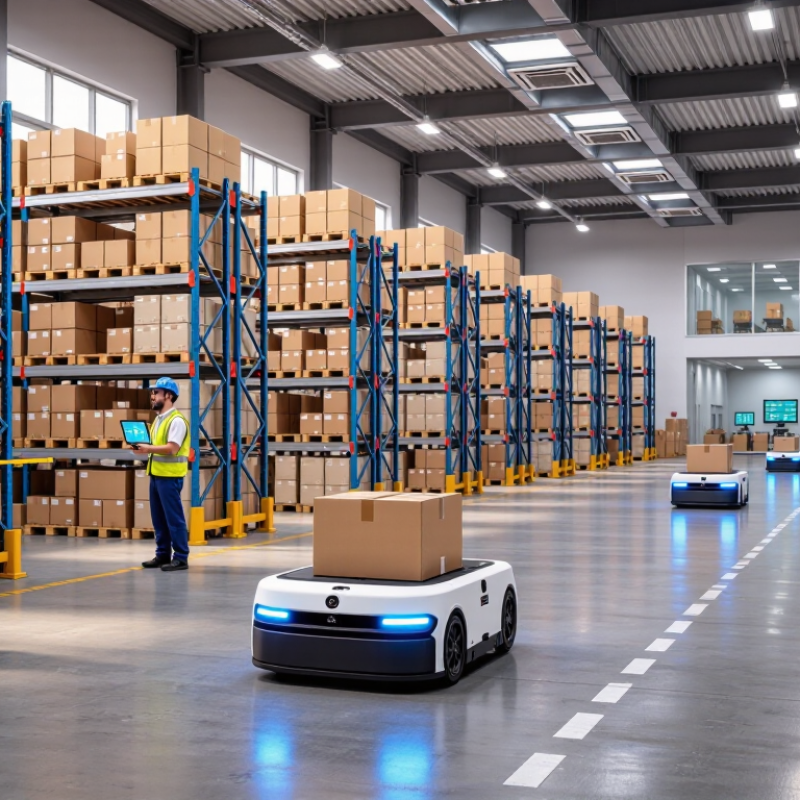
Before comparing storage robots, define the work they must perform. Map every SKU by size, weight, packaging, and handling frequency. A carton of small cosmetics needs different equipment from a 25-kilogram spare part. Record peak hourly orders, average demand, and seasonal surges. Measure aisle width, ceiling height, floor load, and charging locations. Small details decide feasibility.
Buying tip: Build a simple demand table.
List each SKU family, daily lines, order peaks, and required dispatch time. Then calculate robot movements, not only storage capacity. A system holding 50,000 bins may still fail during a two-hour evening rush. Leave room for growth, but challenge optimistic forecasts. My experience is that teams often overstate average demand and undercount returns, replenishment, and exception handling.
Use the International Federation of Robotics’ reported baseline of 541,302 new industrial robot installations worldwide in 2023 as market context, not as a purchasing target. The figure shows broad automation adoption, but it cannot predict your warehouse results. Test throughput with real order histories and difficult SKUs. Include damaged labels, blocked locations, and battery downtime. The simulation may expose uncomfortable assumptions. That is useful. A reliable specification should state measurable outputs, recovery procedures, safety controls, and acceptable manual intervention. Suppliers should validate these points with site data, not attractive demonstrations.
Global industrial robot installations provide a useful market-scale reference when evaluating storage automation investment and supplier capacity.
The chart shows annual global industrial robot installations reported by the International Federation of Robotics: 517,385 units in 2021, 553,052 in 2022, and 541,302 in 2023. Use this baseline to assess market maturity, while sizing a storage robot project from measurable requirements such as SKU count, order lines per hour, peak-season throughput, payload, aisle dimensions, integration scope, and required system availability.
Choosing the right storage robot starts with load weight, aisle width, and daily order volume. AS/RS systems suit high-density warehouses with fixed racks and repeatable storage paths. They can handle heavy pallets, cartons, or bins with strong positioning accuracy. However, installation often requires precise building measurements and long-term planning. A narrow aisle is useful, but not every facility can support it.
AMRs work differently. They move around existing floors and can transport shelves, totes, or pallets between work areas. They fit changing layouts better than fixed systems. Check turning space, floor quality, battery charging, and traffic control before buying. A small AMR may struggle with uneven loads or crowded picking zones. That detail is easy to underestimate.
Cobots support people at packing, picking, or quality-check stations. They are suitable for lighter, repetitive tasks where flexibility matters more than maximum speed. A cobot needs a safe working envelope and clear operator access.
Tip: Measure your heaviest real load, not the average one.
Tip: Draw the narrowest aisle and turning radius on the floor before testing.
Ask suppliers for load charts, cycle-time data, maintenance requirements, and local service response times. Pilot testing is valuable, though one short trial may create false confidence. I have seen layouts look efficient on paper but slow down during peak shifts. Leave room for human judgment. Automation should reduce strain without making daily work harder.
When buying storage robots, safety evidence should come before speed, payload, or price. ISO 3691-4 provides safety requirements for driverless industrial trucks and their systems. It helps buyers examine navigation, protective functions, operating zones, and foreseeable misuse. Ask suppliers for the exact conformity documents, risk assessment, validation results, and safety instructions. Do not accept a general “ISO compliant” statement without technical evidence.
Tips: Observe a live test with loaded and unloaded vehicles. Check how the robot reacts to a person, a fallen carton, blocked aisles, and lost communication. Confirm emergency stops are reachable and effective. Review safe stopping distances at the highest operating speed. Small details matter, especially around shelving corners and shared pedestrian routes.
Tips: Verify software updates, access controls, inspection intervals, and fault records. The installation must also match local workplace rules, electrical requirements, and fire procedures. ISO 3691-4 compliance does not remove the buyer’s duty to assess the complete workplace. A certificate alone is not enough. In practice, unclear handover documents can create serious gaps. Request operator training records and maintenance procedures before signing. We may overlook unusual warehouse behavior during demonstrations, so test realistic congestion, uneven floors, and changing storage layouts.
A storage robot can look efficient while hiding expensive daily demands. Global buyers should calculate total cost of ownership before comparing purchase prices. Include electricity, operator time, software updates, spare parts, inspections, and downtime. A practical estimate should cover five to ten years.
Buying tip: Measure energy use during peak shifts, not only in factory demonstrations. A robot running 20 hours daily may create a different cost profile than a seasonal system. Calculate labor savings carefully. Workers may still handle replenishment, exception orders, safety checks, and inventory corrections. Those minutes add up.
Buying tip: Ask for maintenance records from similar sites. Check battery replacement cycles, response times, training fees, and local service coverage. A 43% AI outlook cited in material-handling research suggests growing AI adoption in warehouse operations. That forecast matters, but it should not replace site evidence. AI features may improve routing, demand prediction, and error detection, yet they can require better data and stronger network infrastructure. Our first cost model was too optimistic. We ignored integration testing and temporary manual work. That mistake changed the payback period by several months. Include a contingency allowance for unclear costs, because real warehouses rarely behave like pilot environments.
| No. | Buying Dimension | What to Measure | Practical Planning Benchmark | TCO Input or Formula | Buyer Action |
|---|---|---|---|---|---|
| 1 | Define the operating profile | Order lines, totes or pallets per hour, SKU count, peak volume, and operating shifts | Use normal, peak, and seasonal demand scenarios; size for peak demand rather than average demand | Required capacity = peak hourly demand × recovery or buffer factor | Provide at least 12 months of demand history and identify promotional or seasonal peaks |
| 2 | Check throughput and latency | Completed picks per hour, travel time, queue time, and station dwell time | Validate performance using your actual SKU mix, travel distances, replenishment tasks, and order profile | Required robots or stations = peak required throughput ÷ tested throughput per unit | Request a witnessed acceptance test with a defined throughput and service-level target |
| 3 | Calculate labor impact | Direct labor hours, walking distance, supervision, training, and exception handling | Model fully loaded labor cost, including wages, benefits, overtime, agency fees, and turnover costs | Annual labor cost = paid hours × fully loaded hourly cost | Compare current-state and future-state labor by task, shift, and volume scenario |
| 4 | Include energy consumption | Robot charging load, idle consumption, HVAC impact, and charging efficiency | Use measured kWh per operating hour or kWh per completed order; energy varies by payload, speed, and utilization | Annual energy cost = annual kWh × local electricity tariff | Use local utility rates, demand charges, taxes, and renewable-energy requirements in the model |
| 5 | Budget maintenance and uptime | Preventive maintenance, spare parts, software support, battery replacement, and mean time to repair | Require documented uptime, response time, parts availability, and planned maintenance windows | Maintenance TCO = service fees + parts + internal technicians + downtime cost | Define service-level credits and escalation procedures before signing the contract |
| 6 | Evaluate software integration | WMS/WES/ERP connectivity, API availability, data ownership, cybersecurity, and upgrade process | Confirm real-time inventory accuracy, order status visibility, role-based access, and audit logs | Integration cost = interfaces + testing + master-data cleansing + ongoing support | Request interface specifications, cybersecurity controls, and a complete data-exit plan |
| 7 | Verify facility compatibility | Floor flatness, load rating, ceiling height, aisle width, fire protection, Wi-Fi, and charging space | Confirm local building, electrical, occupational-safety, and fire-code requirements before installation | Site preparation cost = construction + electrical work + network upgrades + commissioning | Complete a documented site survey and assign responsibility for every modification |
| 8 | Assess scalability and flexibility | Additional robots, workstations, storage density, SKU changes, and layout reconfiguration | Prefer modular systems that can expand without replacing the control platform or major infrastructure | Expansion cost per added unit = hardware + software license + installation + capacity downtime | Ask for a three-year expansion plan and pricing protection for additional capacity |
| 9 | Test AI readiness responsibly | Vision accuracy, slotting recommendations, demand forecasting, anomaly detection, and human override | Treat the 43% AI outlook as a market-planning signal, not a guaranteed productivity result; validate each use case | AI business case = verified labor or service benefit − data, integration, license, and governance costs | Require pilot evidence, accuracy thresholds, explainability, privacy controls, and manual fallback procedures |
| 10 | Compare full lifecycle TCO | Purchase, installation, training, energy, labor, maintenance, software, downtime, and end-of-life costs | Use a 5- to 10-year lifecycle view and discount future cash flows when comparing alternatives | TCO = CapEx + implementation + energy + labor + maintenance + software + downtime − residual value | Run conservative, expected, and high-growth scenarios using the same service and volume assumptions |
When evaluating a storage robot, start with a controlled pilot, not a warehouse-wide promise. Select one aisle, a representative product mix, and a normal shift pattern. Record installation labor, software fees, training hours, and operating costs. Payback should include these figures, not only the purchase price. Cheap hardware can become expensive after integration delays.
Measure order accuracy at the item level and audit exceptions manually. A 99.5% claim means little if damaged packaging causes frequent corrections. Track uptime by separating planned maintenance, charging delays, software stops, and mechanical faults. Ask for service response targets and spare-parts availability. Keep the calculation honest. Early data may look better than daily reality.
Throughput should reflect completed picks per hour, not robot travel alone. Test peak periods, replenishment tasks, empty-bin movements, and operator handoffs. Compare planned capacity with actual output during a two-week pilot. A useful buying tip is to define minimum, target, and stretch KPIs before supplier discussions. Another is to test scalability without adding hidden labor. Increase robot count gradually, then watch congestion, battery queues, and network load. Some assumptions will fail. That is useful. Revise the model before signing a larger deployment. Require exportable performance data, clear acceptance criteria, and documented training. A reliable decision comes from repeated measurements, observed faults, and realistic warehouse behavior.
Map every SKU by size, weight, packaging, and handling frequency. Small cosmetics need different equipment from 25-kilogram spare parts.
Record daily orders, hourly peaks, seasonal surges, returns, replenishment, and exception handling. Average demand alone can mislead.
A system holding 50,000 bins may still fail during a two-hour evening rush. Calculate robot movements, not capacity alone.
Measure aisle width, ceiling height, floor load, turning space, floor quality, and charging locations. Small details matter.
A reported 541,302 new industrial robot installations in 2023 show broad adoption. They do not predict your warehouse results.
They suit dense warehouses with fixed racks and repeatable paths. They can handle pallets, cartons, or bins accurately.
They fit changing layouts and can move shelves, totes, or pallets. Crowded zones and uneven loads may slow them down.
They support packing, picking, or quality checks involving lighter repetitive tasks. Operators still need clear access and safe working space.
Request load charts, cycle-time data, maintenance needs, service response times, safety controls, and recovery procedures. Attractive demonstrations are not enough.
A pilot reveals blocked locations, damaged labels, and battery downtime. One short trial may create false confidence. Peak shifts tell more.
Buying a Storage Robot requires a clear understanding of operational goals rather than simply choosing the newest technology. Start by mapping product types, SKU characteristics, order profiles, storage density, required throughput, and aisle constraints. Use these details to compare automated storage and retrieval systems, autonomous mobile robots, and collaborative robots according to payload, travel distance, flexibility, and available space. Safety should remain a core requirement, especially for driverless equipment, with risk assessments, protective systems, operator training, and recognized safety standards verified before deployment.
A complete total cost of ownership analysis should include energy, labor, software, integration, maintenance, spare parts, training, and future expansion. Because artificial intelligence is expected to influence warehouse automation significantly, buyers should also assess data quality, system compatibility, and cybersecurity. Begin with a focused pilot and define measurable targets for payback period, inventory accuracy, uptime, order throughput, and exception rates. Once performance is proven under real operating conditions, scale gradually while reviewing results and adjusting workflows.

SCP