Buying an Agv Drive for global operations is not a simple motor-selection exercise. It affects vehicle control, payload movement, safety response, energy use, and long-term maintenance. A drive that performs well on a smooth factory floor may struggle on ramps, dusty aisles, or uneven warehouse joints. Small details matter. Wheel diameter, steering accuracy, braking behavior, thermal capacity, and communication protocols all deserve careful review.
Rodney Brooks, a respected robotics expert and founder of several robotics companies, once said, “The best way to predict the future is to invent it.” This idea applies to Agv Drive purchasing, but only with practical discipline. Buyers should evaluate real routes, not attractive brochures. Ask suppliers for verified torque curves, duty-cycle data, stopping distances, service intervals, and integration examples. Request testing under the expected payload. It may reveal uncomfortable limits.
Global buyers must also examine local support, spare-part availability, software compatibility, and commissioning expertise. A lower purchase price can become expensive when a replacement encoder takes weeks to arrive. That risk is easy to underestimate. It happened to many projects.
The following seven buying tips examine the decisions behind reliable Agv Drive selection. They cover technical fit, safety expectations, supplier credibility, lifecycle costs, and future expansion. Some recommendations may not apply equally to every facility. That is the point. Good procurement leaves room for measurement, questioning, and revision before equipment enters daily service.
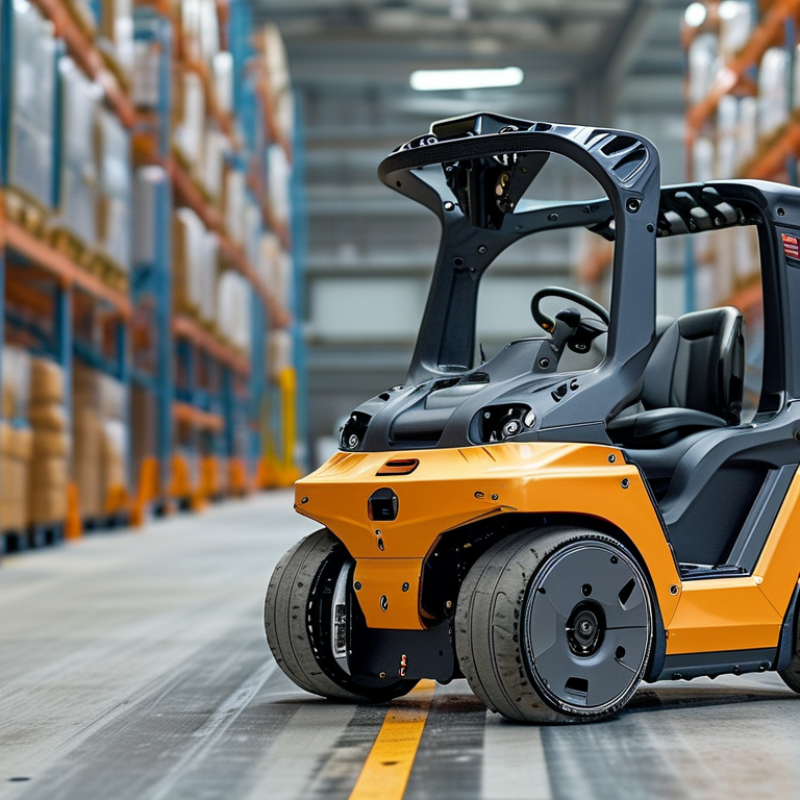
Before selecting an AGV drive, define the vehicle’s real working environment. A smooth warehouse floor may support differential drive, while narrow aisles may require precise steering control. Omnidirectional drive suits lateral movement, but it often increases mechanical complexity and maintenance demands. That trade-off is easy to underestimate.
Measure the payload, center of gravity, wheel load, travel speed, slope, and daily operating hours. A vehicle carrying 1,000 kilograms needs different torque margins from one moving small bins. Check floor joints, dust, moisture, and temperature changes. Small obstacles can cause wheel slip or unstable braking. They matter.
The route also shapes the drive decision. Differential drive offers a tight turning radius and simple control logic. Steering drive can improve straight-line stability over longer distances. For frequent stops, calculate acceleration, deceleration, and motor heating instead of relying only on rated speed. Safety sensors, emergency stopping distance, and floor traction must be tested under the heaviest load.
Pilot testing is essential. Record current, temperature, wheel wear, positioning error, and stopping distance across several shifts. A short demonstration may hide problems. I have seen designs pass a clean-floor test, then struggle near loading docks. That result is not a failure of one component. It shows that the application requirements were incomplete. Leave room for revised assumptions before approving the AGV drive specification.
| No. | Buying Tip | Application Requirement | Recommended AGV Drive Type | Typical Technical Data to Confirm | Buyer Verification Checklist |
|---|---|---|---|---|---|
| 1 | Match the drive layout to the travel path | Straight routes with frequent forward, reverse, and 90° turns. | Differential drive with two powered wheels and stabilizing casters. | In-place rotation capability, wheel diameter, wheelbase, turning behavior, and maximum travel speed. | Map the narrowest aisle, tightest corner, docking angle, and required minimum turning radius before selecting the chassis. |
| 2 | Choose omnidirectional motion only when it adds value | Sideways positioning, tight workstation access, or diagonal movement is essential. | Mecanum-wheel or other omnidirectional drive. | Four-wheel load sharing, wheel roller angle, lateral accuracy, payload distribution, and floor condition. | Confirm that the floor is level, clean, and free from debris that could reduce roller contact. Test the vehicle with the actual load. |
| 3 | Size the drive for the real payload | Transporting pallets, racks, bins, or mixed loads with different centers of gravity. | Differential, steering, or omnidirectional drive selected according to load geometry. | Rated payload, gross vehicle mass, drive-wheel load, traction coefficient, gradeability, and braking distance. | Calculate vehicle mass plus maximum load, not payload alone. Include ramps, acceleration, uneven loading, and emergency-stop conditions. |
| 4 | Check floor and environmental compatibility | Operation on concrete, epoxy-coated floors, expansion joints, ramps, dust, moisture, or temperature-controlled areas. | Solid-wheel differential or steering drive for ordinary flat floors; specialized wheels for demanding surfaces. | Wheel material, wheel hardness, ground clearance, ingress protection, operating temperature, and permitted floor gaps. | Measure floor joints and surface transitions. Confirm whether the wheel compound resists oil, water, abrasion, and marking requirements. |
| 5 | Balance speed, torque, and operating cycle | High-throughput transport with repeated starts, stops, turns, and docking operations. | Servo-driven differential or steering drive with closed-loop control. | Continuous and peak motor torque, acceleration, duty cycle, thermal limits, speed under load, and regenerative braking. | Request performance data at the actual gross mass and route profile. Do not size the motor from unloaded top speed alone. |
| 6 | Define docking and positioning accuracy | Pickup and delivery at conveyors, racks, charging stations, lifts, or production equipment. | Differential or steering drive for standard docking; omnidirectional drive where lateral alignment is required. | Positioning repeatability, wheel slip, encoder resolution, docking speed, approach distance, and load transfer tolerance. | Specify the required tolerance in millimeters and test with the real rack, pallet, conveyor height, and payload over repeated cycles. |
| 7 | Plan maintenance, safety, and global serviceability | Multi-shift operation across sites with different regulations, technicians, and spare-parts availability. | A modular drive system with accessible motors, brakes, encoders, wheels, and controllers. | Wheel replacement interval, brake performance, diagnostic functions, spare-part lead time, safety-rated stopping, and documentation. | Request maintenance procedures, fault codes, electrical drawings, training materials, conformity documentation, and a defined spare-parts plan. |
Note: Actual performance depends on vehicle mass, payload distribution, wheel material, floor conditions, route geometry, battery state, and control settings. Confirm all values through application-specific testing.
Navigation affects the vehicle, controller, floor, lighting, and surrounding surfaces. A system may work on smooth floors but struggle near glass doors or dusty loading areas. Small details matter.
Test stopping accuracy, turning smoothness, wheel slip, and payload performance. Run trials during peak traffic, not only quiet periods. Real conditions reveal weaknesses.
Check uneven flooring, narrow turns, reflective surfaces, lighting changes, and available clearance. Measure the actual aisles. Factory conditions may be too perfect.
Request a documented interface map for every signal. Review protocols, response times, fault codes, emergency stops, and software updates. Do not accept “compatible” without test evidence.
Disconnect a sensor, delay a command, and reduce battery voltage during testing. The system should enter a predictable safe state and provide useful diagnostics. Recovery matters.
Include vehicles, batteries, chargers, software updates, training, spare parts, installation, and downtime. A low quotation may hide major future expenses. Numbers matter.
Request evidence from similar deployments, including payload data and maintenance response times. Confirm local technical support and critical-parts access. Polished slides are not enough.
Confirm shipping terms, packaging, milestones, customs documents, warranty coverage, and transit-damage responsibility. Check battery and radio requirements in the destination market. I once missed the spare-parts list, and commissioning slipped.
Selecting the right Agv Drive begins with clearly defining the vehicle type, application, route conditions, payload, and duty cycle. Buyers should compare load capacity, torque, travel speed, acceleration, and performance in environments such as ramps, narrow aisles, dusty areas, or temperature-controlled facilities. The drive should also match the AGV’s navigation method and communicate reliably with its control system, sensors, and fleet management platform.
Beyond basic performance, global buyers should review safety functions, reliability data, maintenance requirements, spare-parts availability, and technical support. A practical evaluation should include emergency stopping, overload protection, service access, expected operating life, and documentation quality. Finally, compare total cost rather than purchase price alone, including installation, energy use, maintenance, training, shipping, duties, warranty coverage, and delivery schedules. Choosing a supplier with stable production capability, responsive communication, and experience with international logistics can reduce project risks and support long-term operation.

 SCP
SCP