The 2026 market for Agv Autonomous Guided Vehicles is moving from isolated warehouse trials toward measurable, connected operations. Buyers now compare navigation accuracy, payload stability, battery life, software compatibility, safety controls, and service coverage. The machine must perform beyond a polished demonstration.
Industry evidence supports this shift. Interact Analysis reports continued expansion in autonomous mobile robot and AGV deployments, driven by e-commerce, manufacturing, and labor shortages. The International Federation of Robotics also identifies logistics as a major growth area for professional service robots. These reports suggest strong demand, but market forecasts vary because suppliers define AGVs, AMRs, and mobile robots differently. That inconsistency deserves attention.
Dr. Susanne Bieller of the International Federation of Robotics has stated, “Robots are becoming an integral part of our daily lives.” Her observation fits warehouse floors where vehicles move pallets past human pickers, charging stations, and narrow rack aisles. However, adoption is not automatically successful. Poor floor mapping, weak Wi-Fi coverage, unclear traffic rules, and limited local support can reduce productivity quickly.
This guide evaluates the 2026 best Agv Autonomous Guided Vehicles for global buyers using practical criteria. It considers total cost of ownership, integration effort, navigation performance, safety documentation, cybersecurity, maintenance access, and regional compliance expectations. Independent testing remains important. Vendor claims are useful, but incomplete. A reliable choice should match the facility’s actual routes, loads, shifts, and expansion plans. That is where many buying decisions become difficult.
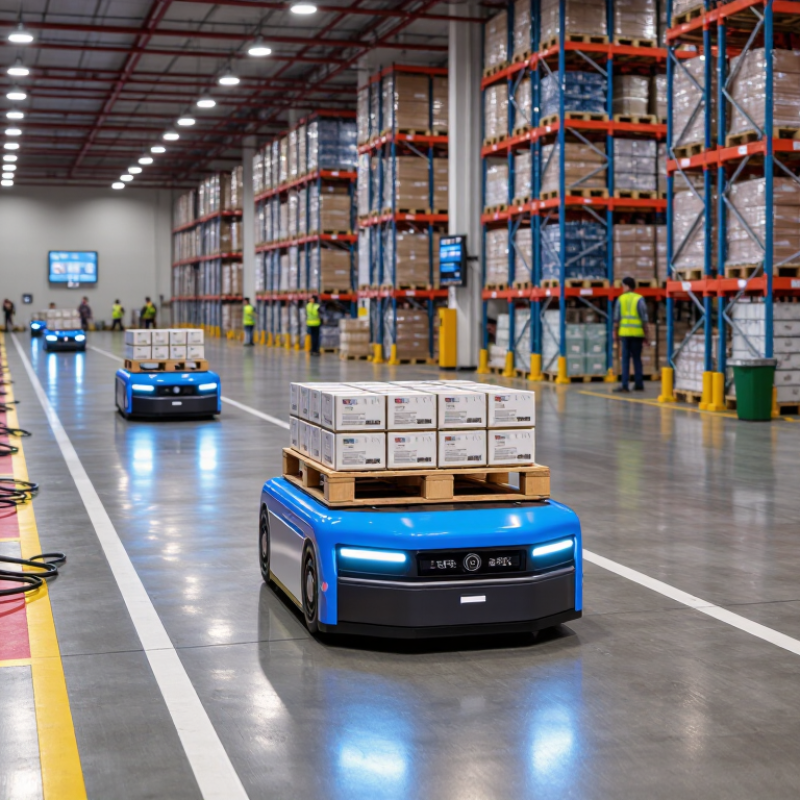
In 2026, AGV selection should begin with the material flow, not the vehicle’s appearance. Tow AGVs suit factories moving several carts between fixed stations. They reduce manual tugging and support predictable routes. Unit-load AGVs carry bins, cartons, or small pallets directly. They work well beside conveyors and automated storage systems.
Forklift AGVs handle pallet lifting, stacking, and retrieval. They need accurate floor markings, safe rack clearances, and reliable load data. Pallet-shuttle vehicles move pallets through dense storage lanes. They can improve space use, but their performance depends on compatible rack design and steady pallet quality. Real facilities are rarely perfect. Damaged pallets still appear.
Tips: Check payload, fork dimensions, turning radius, charging time, and navigation tolerance. Test the vehicle with real pallets, narrow aisles, uneven floors, and peak-hour traffic. Ask for maintenance procedures, operator training, safety records, and integration documents. A short pilot often reveals more than a polished demonstration.
Global buyers should compare total operating conditions, not only purchase prices. Confirm local service coverage, spare-parts availability, software support, and electrical compatibility. Tow vehicles may need flexible route logic when production schedules change. Unit-load vehicles may require better handoff control at conveyors. Forklift AGVs need careful pedestrian separation and rack mapping. Pallet-shuttle systems can be efficient, yet they may become restrictive when storage layouts change. I have seen projects overestimate daily throughput because loading delays were ignored. That mistake is easy to repeat. A reliable assessment measures waiting time, battery recovery, floor quality, and human interaction before final selection.
The International Federation of Robotics reported 541,302 industrial robot installations worldwide in 2023. This figure frames the scale of automation that global AGV buyers are entering. It does not represent AGVs alone. Yet it signals strong investment in programmable movement, handling, and repeatable production tasks. For 2026 planning, buyers should treat AGVs as part of a wider automation system, not isolated carts.
In warehouses and factories, a credible evaluation starts at floor level. Measure aisle width, pallet weight, docking tolerance, lighting, dust, and peak traffic. Watch an empty vehicle approach a rack, then observe it carrying a full load. Small errors become costly when routes cross every few minutes. Safety scanners, controlled speeds, emergency stops, and pedestrian rules need documented validation. Local service capacity matters as much as navigation accuracy.
Installation numbers can create false confidence. High industry growth does not guarantee a quick payback at every site. A pilot with two or three routes may expose weak maps, battery delays, or poor handoff design. That is useful evidence, even when the result is disappointing. Buyers should record cycle time, near-misses, downtime, and operator feedback over several shifts. One overlooked detail remains common: changing cartons can disrupt a carefully tuned workflow.
The 2026 AGV benchmark is becoming more demanding for global buyers. A practical target is a 500–2,000 kg payload, ±10 mm positioning accuracy, and 8–16 hours of runtime. These figures suit pallet movement, line feeding, and warehouse replenishment. The International Federation of Robotics reported 541,302 industrial robots installed worldwide in 2023, showing sustained automation investment. However, AGV performance depends heavily on floor quality, traffic design, and load distribution.
A 2,000 kg vehicle needs careful braking control and battery sizing. Lithium battery systems can support longer shifts, but real runtime falls with ramps, frequent stops, and cold storage. Buyers should request test data at the stated payload, not empty-vehicle demonstrations.
Accuracy claims also need clear conditions. ±10 mm may apply on clean floors with stable markers, but dust, glare, or damaged guidance features can reduce repeatability. That weakness is easy to overlook.
Tips: Ask for a 24-hour duty-cycle test, including charging time and peak traffic. Check compliance with ISO 3691-4 for driverless industrial trucks. Measure aisle width, turning radius, emergency-stop distance, and recovery time after navigation loss. Compare battery degradation after repeated cycles. Some assumptions remain imperfect. A pilot in the actual facility is still more reliable than a specification sheet.
For global buyers, AGV safety begins with the operating environment, not a sales brochure. ISO 3691-4 addresses driverless industrial trucks, including speed control, braking, protective fields, and risk reduction. A vehicle should stop before a worker reaches its travel path. That sounds obvious, yet floor markings, reflective surfaces, and changing light can challenge sensors.
CE marking indicates conformity with applicable European requirements, but it is not a single safety standard. Buyers should review the technical file, risk assessment, emergency-stop design, and validation records. For North American projects, UL 3100 can support evaluation of autonomous mobile equipment and its electrical safety. Installation conditions still matter. A compliant vehicle can become unsafe when charging areas, pallets, or network access are poorly managed.
Interoperability needs equal attention. VDA 5050 provides a communication framework between mobile robots and fleet management systems, helping mixed fleets share orders, maps, and status data. However, software compatibility does not guarantee smooth operation. Version control, message timing, map ownership, and recovery after network loss require site testing. Ask suppliers for documented interface behavior and witnessed fault simulations. Small gaps remain common, especially during manual intervention. That is where procurement teams should slow down, measure results, and question optimistic assumptions.
Compliance and interoperability reference for evaluating industrial AGV and AMR deployments across international markets. Requirements may vary according to vehicle type, operating environment, configuration, and destination country.
| Evaluation Dimension | ISO 3691-4 | CE Marking | UL 3100 | VDA 5050 | Practical Buyer Verification |
|---|---|---|---|---|---|
| Primary Function | Safety requirements and verification methods for driverless industrial trucks and their systems. | Indicates that applicable European Union conformity requirements have been addressed; it is not a single technical standard. | Safety requirements for automated mobile platforms, including relevant electrical, mechanical, control, and system safeguards. | Communication interface specification for coordinating mobile robots with a central fleet control system. | Confirm that the supplier identifies the exact standards, directives, and technical files applicable to the proposed vehicle. |
| Safety Certification Status | Safety standard Used for risk reduction and conformity assessment of driverless industrial trucks. |
Conformity marking The mark alone is not proof of compliance with every safety requirement. |
Safety standard Acceptance depends on the applicable product scope and evaluation route. |
Not a safety certification It defines interoperability behavior rather than independently certifying vehicle safety. |
Request certificates, declarations, test reports, risk assessments, and the exact product configuration covered by each document. |
| Typical Market Relevance | International industrial automation projects involving driverless trucks and automated transport. | European Economic Area markets and other regions that recognize or reference European conformity practices. | North American projects and installations where nationally recognized product safety evaluation is required or preferred. | Multi-vendor fleets requiring a common interface between vehicles and fleet management systems. | Match the compliance package to the installation country, customer specifications, insurance requirements, and site authority rules. |
| Risk Assessment Focus | Operating zones, protective fields, speed control, braking, load handling, navigation, warning devices, and foreseeable misuse. | Hazards are assessed under the applicable European legislation and harmonized or designated standards. | Electrical shock, fire, battery systems, controls, mechanical hazards, protective devices, and abnormal operating conditions. | Operational coordination risks such as order handling, state reporting, traffic control, localization, and charging communication. | Ask for a site-specific risk assessment covering pedestrians, racks, doors, lifts, crossings, charging areas, and emergency procedures. |
| Pedestrian Protection | Addresses protective measures such as safety scanners, detection zones, emergency stops, warning devices, and controlled speed behavior. | Requires protective measures appropriate to the machinery risks and intended use under applicable EU requirements. | Evaluates protective functions and safety-related controls within the applicable platform scope. | Does not define the complete pedestrian-protection design; this remains a vehicle and site-safety responsibility. | Validate detection performance, stopping distance, blind-spot behavior, safety-rated control response, and restart logic. |
| Emergency Stop and Restart | Requires appropriate emergency-stop functions and controlled recovery behavior as part of the safety design. | Requires conformity with applicable machinery and electrical safety provisions for the declared equipment. | Addresses emergency and protective functions according to the evaluated platform design. | May communicate vehicle states and faults but does not replace physical or safety-rated emergency-stop functions. | Test local emergency stops, remote emergency stops, loss of communication, obstacle recovery, and manual reset procedures. |
| Navigation and Traffic Control | Considers safe behavior of driverless trucks during travel, maneuvering, docking, and interaction with the environment. | Requires the navigation and control system to meet the safety objectives applicable to the equipment. | Evaluates relevant control and protective functions within the platform assessment. | Supports standardized order, state, visualization, and traffic-management data exchange between compatible systems. | Confirm map-update controls, localization accuracy, route priorities, blocked-path handling, and safe behavior during network loss. |
| Fleet Integration | Focuses on safe vehicle operation rather than defining a universal fleet-management protocol. | Does not prescribe a single fleet-management interface. | Does not prescribe a universal multi-vendor fleet-management interface. | Designed to support communication between a master control system and mobile robots from different suppliers. | Check supported VDA 5050 version, message coverage, optional functions, API documentation, and integration test results. |
| Interoperability Scope | Primarily concerned with safety of driverless industrial trucks and related systems. | Concerned with conformity to applicable European requirements, not with cross-vendor software compatibility. | Primarily concerned with product safety evaluation, not with a common fleet protocol. | Defines common concepts for orders, nodes, edges, actions, states, errors, factsheets, and visualization data. | Require a documented interface matrix showing supported messages, actions, parameters, limitations, and fallback behavior. |
| Battery and Charging | Safety assessment should include energy storage, charging operations, electrical hazards, and vehicle behavior near charging equipment. | Battery and charger conformity depends on the applicable EU legislation and standards for the complete equipment configuration. | Battery, charging, wiring, protection, and fire-related requirements depend on the evaluated product architecture and applicable scope. | Can support charging-related actions and status exchange when implemented by the vehicle and fleet-control systems. | Verify battery chemistry, charging time, automatic charging compatibility, thermal protections, ventilation needs, and end-of-life handling. |
| Documentation Expected | Risk assessment, safety validation evidence, operating instructions, maintenance information, and technical specifications. | Declaration of Conformity or Declaration of Incorporation where applicable, technical documentation, instructions, and conformity information. | Listing or certification information, installation instructions, ratings, limitations, and required protective measures where applicable. | Interface specification, factsheet, supported message definitions, error handling, and integration documentation. | Make document delivery a contractual milestone before factory acceptance testing and site acceptance testing. |
| Best Use in Procurement | Use as the core safety reference for selecting and validating driverless industrial trucks. | Use to confirm legal-market access and conformity responsibilities for European deployments. | Use when North American product safety evaluation or customer acceptance requires the relevant UL/ANSI/CSA pathway. | Use to reduce software-integration dependence when combining vehicles and fleet systems from multiple sources. | Score safety, legal conformity, software interoperability, serviceability, cybersecurity, lifecycle support, and total cost together. |
2026 Best AGV Autonomous Guided Vehicles for Global Buyers
For global buyers, the best AGV depends on the site, not the brochure. A warehouse needs reliable pallet movement, accurate positioning, and safe operation around picking teams. Buyers should compare payload, turning radius, charging time, navigation method, and integration with warehouse software. In busy aisles, a compact vehicle may outperform a stronger model. That detail is often missed.
Factories require stable delivery between assembly lines, storage areas, and quality stations. Look for route flexibility, precise stopping, and resistance to dust, vibration, or temperature changes. A strong AGV should communicate clearly with doors, lifts, conveyors, and existing control systems. Test it during shift changes. Quiet periods can hide real traffic problems.
Hospitals need cleanable surfaces, gentle handling, and dependable delivery for meals, linens, and sealed supplies. Low noise matters near patient rooms. Ports demand higher payloads, weather protection, long travel ranges, and accurate movement across large yards. Safety scanners must remain effective in changing light and crowded zones. One matrix cannot serve every sector. I would question any supplier promising effortless installation. Pilot trials reveal weak maps, delayed alerts, and charging bottlenecks. Ask for service response times, operator training, cybersecurity controls, and documented performance data. Small failures become expensive when several vehicles share one route.
A practical target is 500–2,000 kilograms with about ±10 millimeters positioning accuracy. These figures suit pallet movement, line feeding, and warehouse replenishment. Real performance varies.
Typical runtime targets range from 8 to 16 hours. Ramps, frequent stops, heavy loads, and cold rooms reduce actual runtime. Charging time matters too.
No. Request testing with the intended payload and realistic traffic. A 2,000-kilogram load changes braking, battery use, and turning behavior. Empty tests can mislead.
Ask for a 24-hour test covering charging, peak traffic, stops, and repeated routes. Measure runtime with loaded vehicles, not laboratory assumptions. The test may reveal uncomfortable gaps.
Not necessarily. Clean floors and stable guidance features support better repeatability. Dust, glare, damaged markers, and changing light can reduce accuracy. The floor is part of the system.
Measure aisle width, turning radius, emergency-stop distance, and recovery time. Check ramps, floor quality, charging locations, and pallet spacing. Small errors become traffic problems.
Request risk assessments, technical files, emergency-stop details, and validation records. Safety depends on speed control, braking, protective fields, and worker separation. Paperwork alone is insufficient.
Use a documented communication framework for orders, maps, status data, and task allocation. Test software versions, message timing, map ownership, and network-loss recovery. Compatibility is not smooth operation.
A pilot tests the vehicle inside real aisles, lighting, traffic, and charging conditions. Observe manual intervention and navigation recovery. Specifications remain assumptions until measured.
In 2026, Agv Autonomous Guided Vehicles will play an increasingly important role in modern logistics, manufacturing, healthcare, and port operations. The market includes tow vehicles, unit-load carriers, automated forklifts, and pallet-shuttle systems, each designed for different material-handling requirements. With industrial robot installations reaching 541,302 units in 2023, demand for reliable and flexible automation continues to grow across global industries.
For buyers, key evaluation criteria include payload capacities from 500 to 2,000 kg, positioning accuracy of approximately ±10 mm, and operating times of 8–16 hours per charge. Safety and system compatibility are equally important, including alignment with ISO 3691-4, CE, UL 3100, and VDA 5050 requirements. The best solution depends on the application: warehouses may prioritize throughput and navigation flexibility, factories may need precise line-side delivery, hospitals require quiet and hygienic operation, while ports demand durability and dependable performance in demanding environments.

SCP